Entry 02 · Getting seen
Entry one: book it like a session.
What the first visit at Missouri Injury Clinic actually produces, how the phone call goes, what to bring, what to stop saying, and the emergency bright line.
The short entry
- The first visit produces four things: a history, a physical exam, written findings, and a treatment plan with the next visit dated.
- The call is four sentences: which lane, the date, one sentence on what happened, and the earliest opening that fits. Offices close 12 to 2.
- Bring the mechanism, what has changed, any existing paperwork, and your training calendar. Hand over documents, do not summarize them.
- Stop saying it is probably nothing. The plan is built on the injury you describe, not the one you have.
- Head hit with vomiting or worsening confusion, chest pain, one-sided weakness: emergency room, not a clinic.
Every training log has an entry one. The first squat number, the first mile time, the first weigh-in. It is not impressive and it is not supposed to be; it is the baseline everything afterward gets compared to. The first visit after an injury is the same thing. This entry describes what that visit at Missouri Injury Clinic actually is, as the clinic publishes it, what you should walk in with, and what you should walk out with. No mystery, no pitch.
What the visit produces
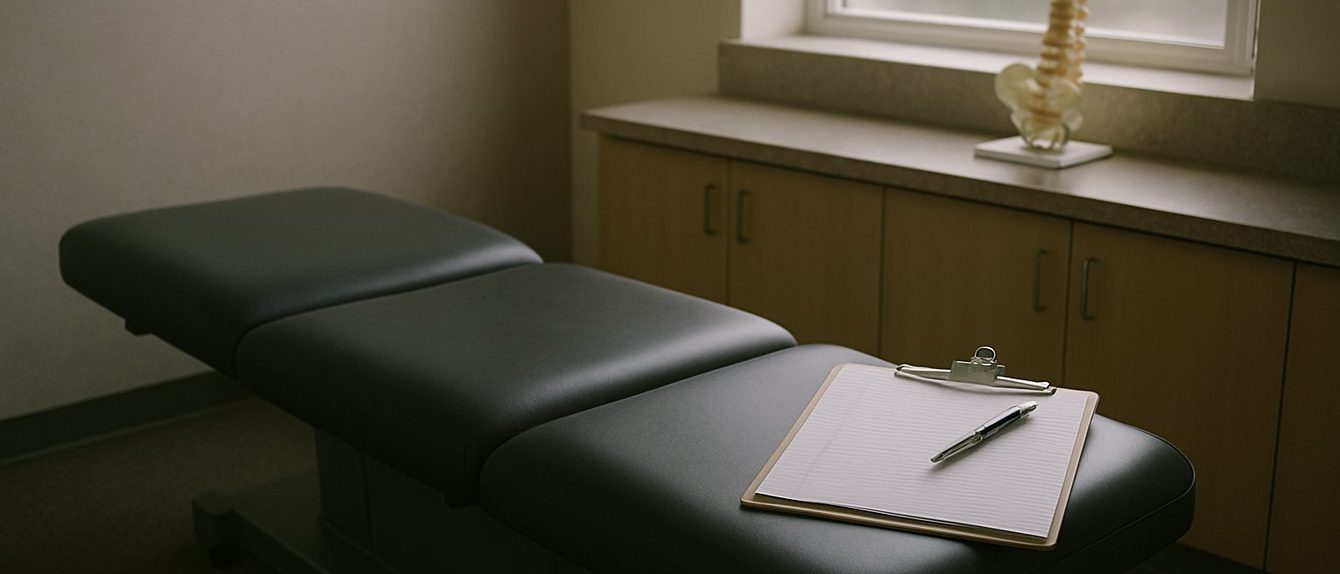
Four things. A history: what happened, when, what you felt first, and what has changed since. A physical exam: a licensed clinician, in this clinic Joseph L. Hollingsworth, DC, or a clinician working under the clinic's roof, looking at range of motion, strength, the joint or the spine segment that took the load, and how you move. Findings: what the exam showed, written down. And a treatment plan: what happens next, on what schedule, with the next visit dated.
That is the entry. It is a care document first. It exists so the next visit, and any clinician who comes after, works from facts instead of somebody's memory of a bad week. If the findings point somewhere the clinic does not go, the honest answer is a referral or imaging, and an office that tells you that is doing its job.
The phone call, in four sentences
The call is shorter than most athletes fear. Say which lane: sports injury, auto injury, or both, because a crash on the way home from practice is both. Say the date it happened. Say, in one sentence, what happened and where it hurts today. Ask for the earliest opening that does not collide with work or practice, and remember that every office closes from 12 to 2 every day, so mornings and afternoons are the slots that exist.
If your head was involved, say that out loud on the phone. Concussion rehab is its own lane at the clinic and the intake is different. If any of the emergency signs in the strip at the top of this page are present, you are not calling a clinic at all.
What to bring
- The date and the mechanism, in your own words. You wrote this down on night one if you read the timeline. If you did not, write it now, before the drive.
- What has changed since. Worse on day two, better by day five, a new catch at one angle, a headache that moved. Change is the most useful thing you can report.
- Any paperwork that already exists: an emergency room discharge sheet, an athletic trainer's note, an imaging report. Do not summarize it. Hand it over.
- Your training context. What you were doing before the injury, what you are trying to get back to, and when the season or the meet is. A plan that ignores the calendar is not a plan you will follow.
- If a crash was involved and you already have an attorney, bring their contact so records can be sent where they need to go. That is the entire extent of this desk's advice on the subject.
- A list of what you are currently doing to the injury: ice, heat, a brace, a supplement, a YouTube protocol. The clinician needs to know what they are working alongside.
What to say, and what to stop saying
Athletes underreport. It is a trained habit; the culture rewards the kid who says "I'm good" and jogs back on. In an exam room that habit costs you, because the plan gets built on the injury you described, not the one you have. Say the thing that embarrasses you: that you cannot sleep on that side, that you have been checking your mirror by turning your whole body, that the fog has not cleared, that the ankle gives way on stairs. Say the number on the scale you have been using, even if it feels dramatic.
Stop saying "it's probably nothing." Nobody in the room is going to think less of you for being examined, and "probably nothing" is not a finding. The clinician will tell you if it is nothing. That is a good outcome and it still gets written down, dated, which is the point.
Questions worth asking before you leave
What did you find. What is the plan. How many visits, roughly, and over what stretch. What should change by the next visit, and what would make you send me somewhere else. Can I train, and what specifically can I not do. How is a visit billed, and what does the clinic accept. That last one is for the clinic to answer, not this desk; we do not publish payment terms for a clinic we do not own, and we will not describe an arrangement we cannot verify.
A clinician who can answer those questions plainly is handing you a record worth keeping. Write the answers in your own log next to the date. Now you have two entries for the same day, the clinic's and yours, and they should agree.
The emergency bright line, once more
Chest pain, a sudden severe headache, weakness or numbness on one side, trouble speaking, a loss of bowel or bladder control, or a head injury with vomiting or worsening confusion is an emergency room trip right now, not a call to a clinic. An injury clinic is built for planned care. A head hit with vomiting, a headache that keeps getting worse, confusion that deepens instead of clearing, numbness that spreads, or any chest pain belongs in an emergency room today, and the clinic will tell you the same thing if you call. The CDC's HEADS UP materials list the danger signs for a head injury in plain language (CDC, HEADS UP: Signs and Symptoms). Read them once, before you need them.
After entry one
The middle entries are unglamorous: showing up to dated visits, doing the plan, watching the numbers move. That is the whole difference between an athlete who returns and one who lingers at eighty percent for a year, and it gets its own entry in return to play. For what the record is, and is not, read the dated record.
Write entry one
One call. One opening. Entry one on the books.
Say which lane, the date, and what happened. Ask for the earliest morning or afternoon opening. You leave with findings and a written plan.
O'Fallon is the nearest office for most of our readers. Hazelwood and Tesson Ferry hold the same exam. Every office is closed 12 to 2, every day.
Next entries
03The record: what an injury exam is09Offices: O'Fallon, Hazelwood, Tesson Ferry04Return to play: the comeback is a data problem10Questions: QuestionsEverything on this desk is educational. It is not medical advice, not a diagnosis, and not a substitute for an exam by a licensed clinician.