Entry 06 · The crash
When the season ends in a car.
A rear-end hit in the practice lot loads the neck harder than a workout. Why athletes shrug off crash injuries, the five-line crash entry, and why the crash belongs in the ledger with a date.
The short entry
- A low-speed rear-end hit loads the neck in a way training never does. Whiplash arrives late, often at day two, which is why athletes misfile it as practice soreness.
- An exam does not create an injury. It finds one before it finds you in week four with a compensating shoulder.
- Write the five-line crash entry the same day: date and place, mechanism, head, what changed, any paperwork that already exists.
- Say car crash in the first sentence of the call. The auto lane has its own timeline; the exam is the same exam.
- If a claim is ever part of your story, the dated first exam is what everyone asks for. You do not need to have decided anything to get examined.
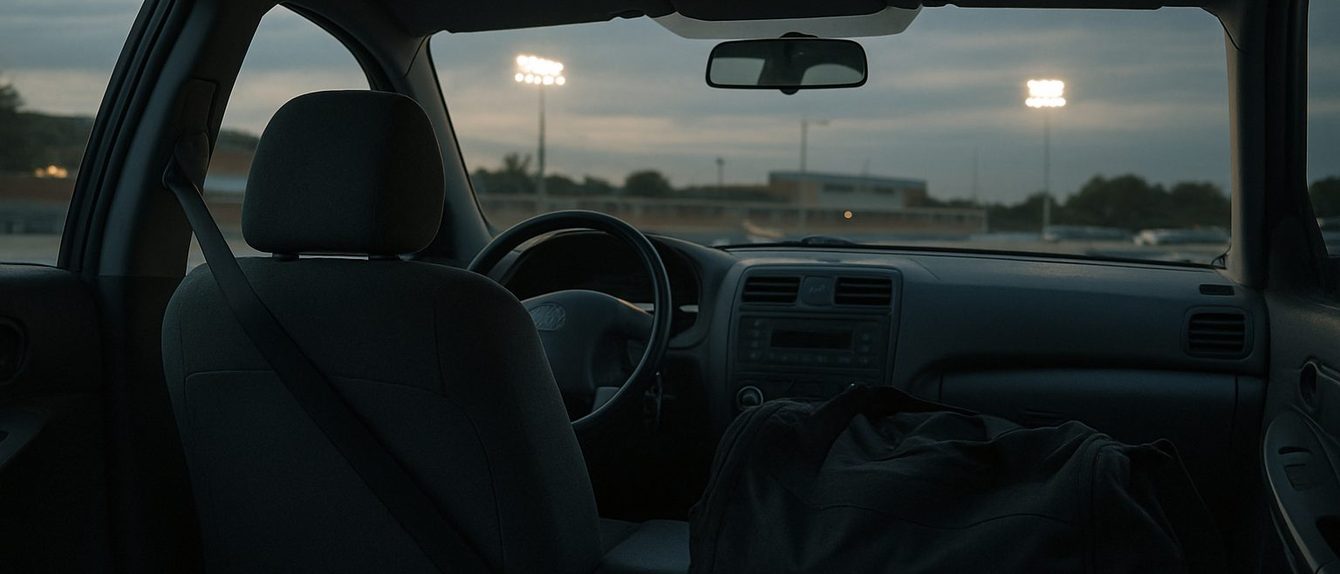
Plenty of athletic seasons end in a car, not on a field. The rear-end hit at the light outside the practice lot, the fender bender in the stadium exit line, the sideswipe on I-70 on the way to a Saturday meet. Athletes walk away from these more often than most people, because they are young and strong and the car is fine. Then day two arrives, and the neck that turns for a mirror check does not turn anymore, and the athlete decides it is probably from practice. This entry is about why that decision is wrong, and what to do instead.
The physics of a parking lot hit
A rear-end collision at parking-lot speed loads the neck in a way no workout does, because the load is uninvited and the muscles are not braced for it. The torso is pushed forward by the seat, the head lags, then whips forward. The neck goes through its end range in both directions in a fraction of a second. Whiplash is the common name for the strain that results, and NINDS describes its symptoms as neck pain and stiffness, headache, dizziness, and pain in the shoulders or back, with onset that can be delayed (NINDS, Whiplash).
A seat belt keeps you in the car and alive; NHTSA's seat belt guidance is unambiguous about that and this desk will not pretend otherwise (NHTSA, Seat Belts). It also means the torso is held while the head is not, which is part of why the neck takes the load. Wear the belt. Then treat what the belt could not prevent like the injury it is.
Why athletes shrug it off
Three reasons, and they stack. First, the culture: an athlete's whole identity is built on absorbing contact and continuing, and a car hit feels like contact. Second, the misfile: the soreness peaks at day two, which is exactly when training soreness peaks, so the brain files it under practice. Third, the calendar: there is a game Friday, and an exam might produce a finding that interferes with Friday.
The third reason is the one to be honest about. An exam does not create an injury. It finds one that is already there, before it finds you in week four with a shoulder that has been compensating for a neck you never had looked at. A documented exam this week protects your health and your options, and not getting one does not make Friday safer. It makes Friday a guess.
The crash entry, line by line
- Date, time, and place. The intersection or the lot. Which direction you were going, which direction the other car came from.
- Mechanism: rear-ended, sideswiped, T-boned, hit a fixed object. Speed, roughly. Whether you saw it coming and braced.
- Head: did it hit anything, did it whip, any moment of blankness. This line matters enough to get its own entry in head hits.
- What you felt in the first hour. Then what you felt that night. Then day two. Most of the useful information is in the change.
- Anything that already exists on paper: a police report number, an emergency room discharge, a photo of the car.
Five lines. They take three minutes at the scene or that evening, and they are the history you will give at the exam, which entry one describes. Written on the day, they are accurate. Reconstructed two weeks later, they are a story.
Two lanes, one exam
Missouri Injury Clinic publishes auto injuries, meaning diagnosis and a treatment plan after a crash, as one of its three lanes, alongside sports injuries and concussion rehab. For an athlete hit on the way home from practice, the honest description on the phone is both: auto injury, and here is what I am trying to get back to. The exam is the same exam, and the written plan accounts for the season. Say "car crash" in the first sentence, because the auto lane carries its own timeline and its own paperwork consequences.
The paperwork sentence, and where it stops
A crash comes with other people's paperwork in a way a tackle does not. If a claim is ever part of your story, the dated record from the first exam is what everyone will ask for. You do not need to have decided anything about a claim before you get examined; the exam is care, and the record is a care document first. If you already have an attorney, bring their contact so records can be sent where they need to go. That is the complete extent of this desk's involvement with the subject. The clinic is a clinic, run by a chiropractor. Nobody here is a lawyer and nothing here is legal advice. The record entry has the longer version.
The emergency line, for crashes specifically
Chest pain, a sudden severe headache, weakness or numbness on one side, trouble speaking, a loss of bowel or bladder control, or a head injury with vomiting or worsening confusion is an emergency room trip right now, not a call to a clinic. After a crash, add these to the list: any loss of consciousness at the scene, a seat belt mark with pain in the chest or belly, neck pain with numbness or weakness in the arms or legs, or a headache that keeps getting worse. Those are an emergency room tonight, and the clinic will say the same if you call.
Which office
For readers out west, O'Fallon on West Terra Lane is the closest office, and Hazelwood and Tesson Ferry cover north and south county. Every office closes 12 to 2 daily. The offices entry has addresses and phones. Pick the one you can drive to this week, and if you cannot drive because of the neck, that is its own finding worth saying out loud on the call.
Write entry one
The crash is an injury. Log it.
Missouri Injury Clinic publishes auto injuries as a lane: diagnosis and a treatment plan after a crash. Call this week, say car crash and the date, and take the earliest opening.
O'Fallon is the nearest office for most of our readers. Hazelwood and Tesson Ferry hold the same exam. Every office is closed 12 to 2, every day.
Next entries
01After the hit: the first fourteen days03The record: what an injury exam is05Head hits: Head hits09Offices: O'Fallon, Hazelwood, Tesson FerryEverything on this desk is educational. It is not medical advice, not a diagnosis, and not a substitute for an exam by a licensed clinician.